
SAFESIDE NEWS
Safeside Treatments LLC & The Corona Virus
Although things are very chaotic and crazy right now Safeside Treatments LLC will continue with our 2020 season protecting families from harmful ticks & mosquitoes. Its true that Covid19 virus is spreading but that does not mean Lyme Disease or EEE Eastern Equine Encephalitis will take a step back. These viruses are all major threats to us humans and pets. It is still very important to treat your properties from these harmful pests. The last thing we need is another EEE out break in CT just like what happened in 2018 claiming many lives on top of this deadly Covid19.
Our official start date is Monday March 23rd 2020. We have already scheduled our first treatments for March into April. Sign up and book your spring treatments with us today as our schedule is filling up fast. Ask about a FREE all organic mosquito control with your spring organic tick control application for new clients. Follow us on social media @safesidetreatments #safesidetreatments Lets all do our part to stop this virus. “We are all in this together and we will get through this together”
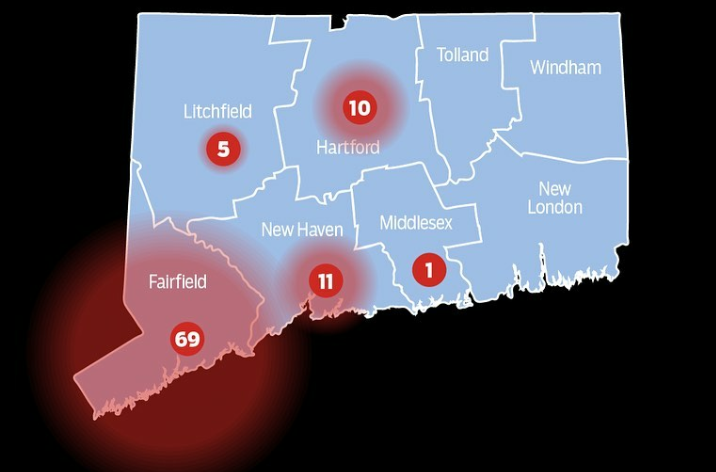
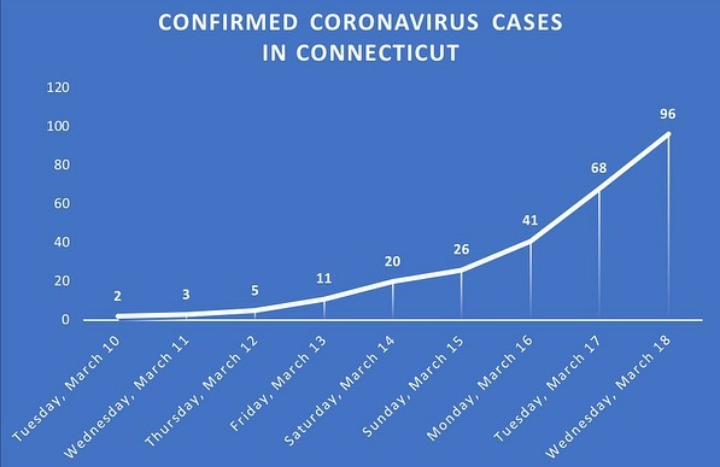
Click Links Below to find out more info on the latest Corona Virus updates town by town in Connecticut by CTPost.com & WFSB.com
https://www.ctpost.com/local/article/Town-by-town-breakdown-Coronavirus-cases-in-CT-15148619.php
https://www.wfsb.com/news/the-latest-covid--cases-rise-to/article_54edec52-67ad-11ea-8482-877cb5d00dcd.html
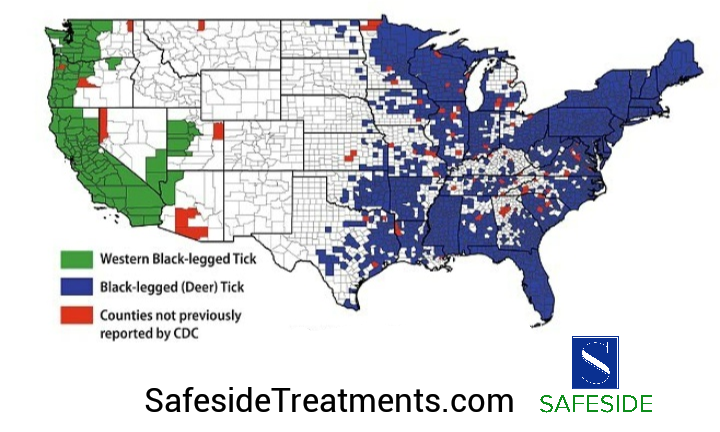
U.S. Tick Map
This map shows the parts of the country where where black legged ticks thrive. Black legged ticks otherwise known as deer ticks here in Connecticut are responsible for transmitting Lyme Disease to humans. Today there is an increasing number of Lyme Disease cases all throughout Connecticut as well as across the nation. The CDC only expects this number to to get worse as time goes on.
Below is an article by CDC.gov about current status on tick surveillance in the U.S.
https://www.cdc.gov/ticks/surveillance/index.html
NY Times Article On Moose & Ticks
Check out this interesting NY Times article on how warm winters affect how ticks and animals interact. Whether or not Climate Change or Global Warming is to blame it is still a fact that the tick population is rising every year. Click the link below to read more.
Article Written by: Kendra Pierre-Louis
https://www.nytimes.com/2018/10/18/climate/moose-ticks.html

Ticks Do Not Die in the Winter
Did you know that it is a big misconception that ticks die off in the winter. They DO NOT die in the winter here in Connecticut and across the nation. Most go dormant or latch onto a host such as a deer, moose or any other warm blooded animal. Ticks either find shelter in leaf litters, wood piles and some burrow underground. They can remain active during the cooler months. Blacklegged ticks which carry Lyme Disease remain active as long as temperatures are above freezing. Its important to know that they are a threat year round.

Winter Season & Holidays 2019
Its officially winter for us. As of Thanksgiving Day 2019 we will not be doing anymore services until spring of 2020 when the snow melts and the weather is warmer. Our office will still be open so you may contact us if you have any questions, concerns or would like to sign up for spring treatments in 2020. We will be here throughout the winter for all our clients as well as any new ones. Keep up with new updates, content and our winter activities by following us on social media @safesidetreatments . Until then enjoy the winter season and we wish all of you Happy Holidays from all of us at Safeside Treatments LLC.


Copy of 3 People Died in CT from EEE & Detected in 19 Towns
There has been two confirmed deaths linked to Eastern Equine Encephalitis in Connecticut. This is why it is very important to treat your properties for mosquitoes regularly. EEE is a big health risk in Connecticut. Specially for the elderly and young children. If you can please treat your property and take the proper precautions. Read the news article at the link below to find out more.
Click Link Below to see WFSB.com News Channel 3 Connecticut Articles:
The maps below represent the areas with West Nile and EEE activity in CT. From CT DEEP


Lower Temps Needed in CT for EEE Threat to Subside
The low temperatures Friday night into Saturday possibly killed off mosquitoes in the Litchfield area. The Connecticut Agricultural Experiment Station said it will have a better idea when it collects data there later this week. It said EEE-carrying mosquitoes generally have a flight range of 2.5 to 5.5 miles. As of earlier this week, mosquitoes in the following towns tested positive for EEE: Bethany, Chester, East Lyme, Groton, Haddam, Hampton, Killingworth, Ledyard, Lyme, Madison, Middlefield, North Stonington, Old Lyme, Plainfield, Shelton, South Windsor, Stamford, Stonington, Voluntown, Waterford Even if people do not live near one of the 20 towns identified, the CAES continued to urge them to be cautious. The state saw unusually high activity for the rare mosquito-borne virus this year.
Check out WFSB.com / WFSB News Channel 3 Connecticut full article on the latest EEE news.
Chick the link below for full article

CDC West Nile Map for 2019
There has been several cases of West Nile EEE Eastern Equine Encephalitis found throughout Connecticut in 2019. Please do what ever is necessary to protect yourself and family.
Link to CDC and more West Nile Virus info:
https://www.cdc.gov/westnile/statsmaps/preliminarymapsdata2019/index.html


Summer 2019 Pics
Make sure to follow our Instagram Page and check out our You Tube page for video clips of our 2019 season. Click the following links: @SafesideTreatments Instagram & SafesideTreatments YouTube


Wedding Venues
Desirable Insects
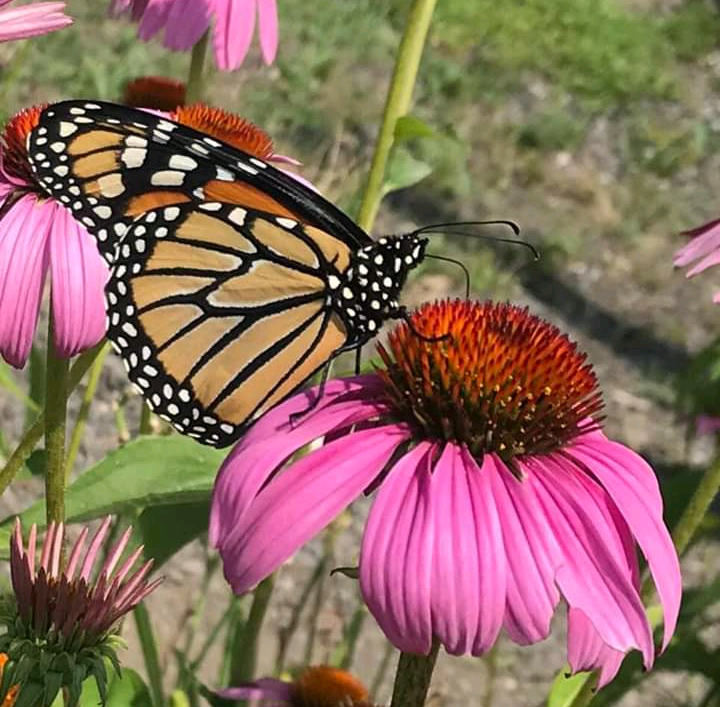
Our treatments will not harm bees, butterflies and other desirable insects. We understand that the environment needs these insects. Plants and flowers rely on them to pollinate so we always make sure we do not harm them. We personally tested our treatments and work closely with the Connecticut Department of Environmental Protection along with a local CT bee keeper to ensure these insects are safe.